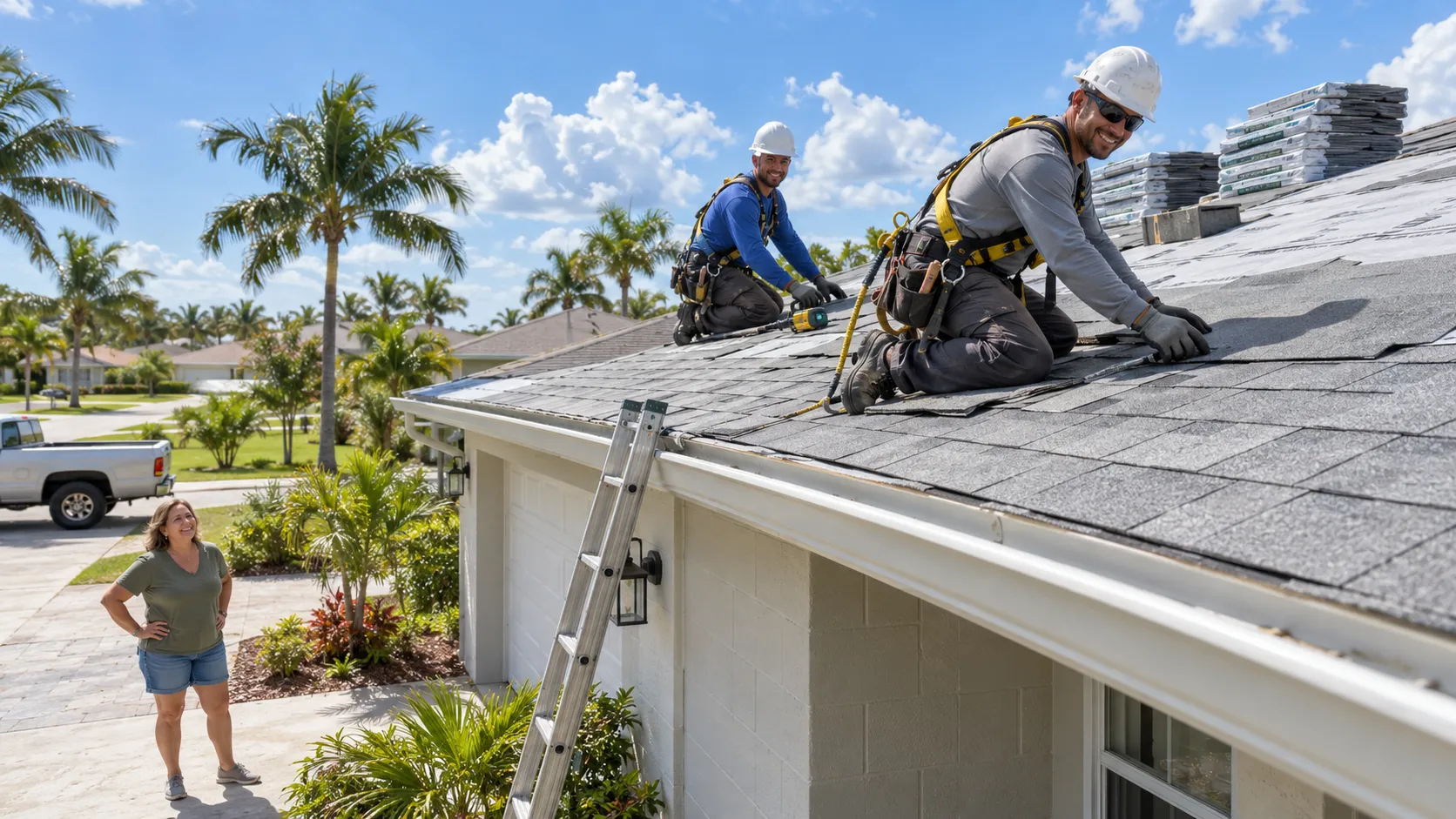
Roof Replacement
Your roof is worn out or storm-hit, and Cousincycle Roofing points you to local providers who install new ones.

Your roof is worn, leaking or hurt by a storm. Cousincycle Roofing connects you with a local provider who can look at it, explain your options and give a written quote.
A tired roof does not stay quiet for long. It leaks. It lets in wind. In Delray Beach, it also has to handle heavy rain and thick, wet air for most of the year.
Cousincycle Roofing is a referral service. We do not do roof work. We connect you with a local provider in our network. That provider checks your roof, talks through your choices and gives you a written quote.
Most of the homeowners we want to help are thinking about a new roof. That means the old roof comes off and a new one goes on. It works for shingle roofs and for tile roofs.
Here is a simple plan:
Request a callback to ask about provider availability in the Delray Beach area.
We are a go-between. You tell us about your roof. We connect you with an independent roofing provider near you. That is all we do. The provider does the work, signs the contract and answers for the job.
A good provider walks the roof, or looks at it from the ground and from the attic. They check the decking (the wood boards under the roofing). They look for soft spots, rot and old leaks. Then they explain what they see in plain words.
You should get a written quote. It should list the materials, the scope of work, how they handle old roofing and what the price covers.
A roof does not last forever. Sun, heat, rain and storms wear it down. When repairs stop making sense, a new roof is the next step. Most of our referrals are for that.
There is no obligation to hire anyone. You decide. Prices vary by job, so always get the number in writing before you agree to anything.
Cousincycle Roofing serves Delray Beach and the rest of the Delray Beach area. That includes older subdivisions, newer neighborhoods and condo communities.
Many homes here are concrete block homes on slabs. Others are tile roofs or shingle roofs from the 1970s through the 2000s. Many of those roofs are now at the age where a closer look makes sense.
Local roofing contractors know how this climate treats a roof. Summer storms roll in almost every day. Hurricane season runs from June to November. The air stays humid most of the year. Those things shape which materials, fasteners and ventilation a provider will suggest.
If you live in a condo or an HOA community, ask about rules first. Some groups need approval for color, material or timing. A provider who works nearby often knows how that goes.
Tell us your town and the type of roof you have. We will look for a provider in our network who works in your part of the Delray Beach area.
The job is not done when the crew drives away. A roof lasts longer when you look after it. A few small habits can save you real money later.
Walk the yard before and after storm season. Look at the roof from the ground. Use binoculars if you have them. You want to spot lifted shingles, cracked or slipped tiles, and bent metal edges.
Humid weather grows algae, moss and dark streaks. Leaves and sticks pile up in valleys (the low lines where two roof slopes meet). Clear them gently. Ask the provider how to clean your roof type. Harsh pressure washing can harm shingles and tile.
Clogged gutters hold water against the roof edge. That can rot the wood there. Clear them before the wet season and after big storms.
Branches scrape roofs in wind. They also drop debris. Keep limbs back from the roof. In hurricane season, loose branches can become flying hazards.
Keep one folder, paper or digital. Put in the quote, the contract, the material names, the warranty papers from the provider and the final invoice. Add dated photos of the finished roof. This helps with future estimates and any insurance talk.
Snap pictures of the roof, the ceilings and the yard. Write the date and what happened. If damage shows up, you will have a clear record. Some policies may cover sudden damage, so check your policy and ask your insurer what they need. Providers can often help document damage for a claim.
Call a provider if you see stains on a ceiling, daylight in the attic, shingle grit in the gutters or tiles that have shifted. If a storm opens a hole, ask about emergency roof repair. Many providers can respond quickly, but availability varies.
Some providers offer yearly checkups. Ask what a visit includes and what it costs. Get that in writing too. Storm damage repair and hail damage roof replacement are easier to sort out when you already have records on file.
Ready to look at your roof? Start with a quick conversation. Share what you see, what you know about the age of the roof and what you want to fix.
Request a callback to check provider availability near you. Or send a request and we will pass your details to a local provider in our network. You are never required to hire anyone.
Have your photos and notes handy. They help the provider give you a clearer written quote.
Tell us about your roof and where you live. We will point you to a local provider in our network who can look at it and give you a written quote.
No obligationLook at age, leaks and how widespread the damage is. A few loose shingles can often be fixed. If the roof is old, leaks in many spots, or has soft decking, a new roof may make more sense. A local provider can inspect it and explain both options in writing.
It varies a lot. In the U.S., a typical shingle replacement often runs from several thousand dollars to the high teens. Tile usually costs more. Size, slope, materials and decking repairs all change the price. Ask two or three providers for a written quote that lists everything.
Some policies may cover sudden damage from storms or hail, but not wear and tear. Check your policy and ask your insurer what they need. Take dated photos and keep notes. Providers can often help document damage for a claim. Coverage depends on your policy.
No. Cousincycle Roofing is a referral service. We connect homeowners with independent local roofing providers in our network. The provider does the work, writes the contract and answers for the job. You are never required to hire anyone we connect you with.
Start by checking for loose, cracked or missing roofing pieces. Clear gutters and valleys. Trim branches near the roof. Take dated photos of the roof as it looks now, and store them in a roof file. A provider can also do a checkup and note any weak spots.
These are the three kinds of roof help you can ask about. Each one is done by an independent provider in our network, not by Cousincycle Roofing. Pick the one that sounds closest to your situation. Then ask the provider which option suits your roof and your budget.
Your roof is worn out or storm-hit, and Cousincycle Roofing points you to local providers who install new ones.
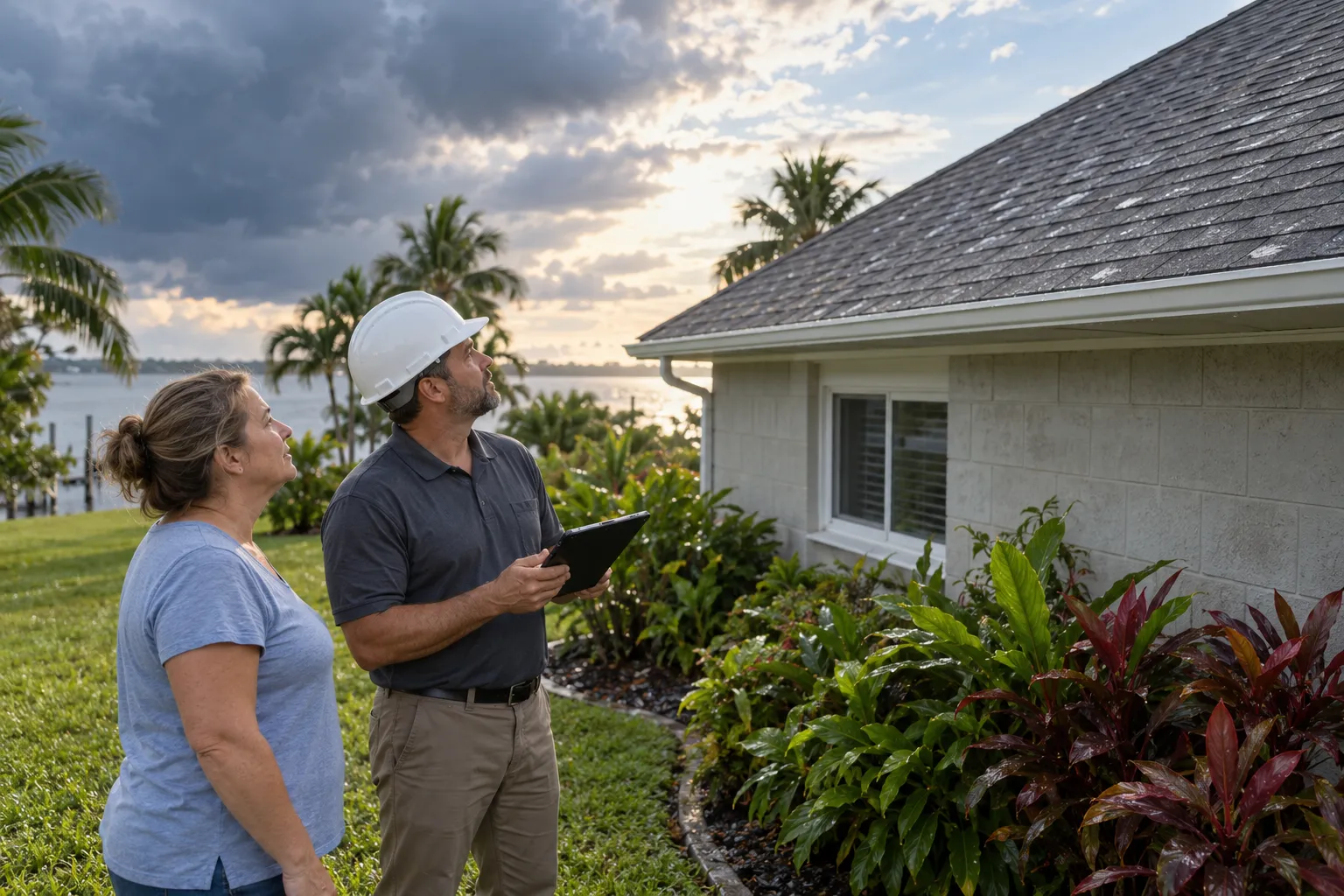
Storm hit your roof? Learn what to do first, what to document, and how to find a local provider.
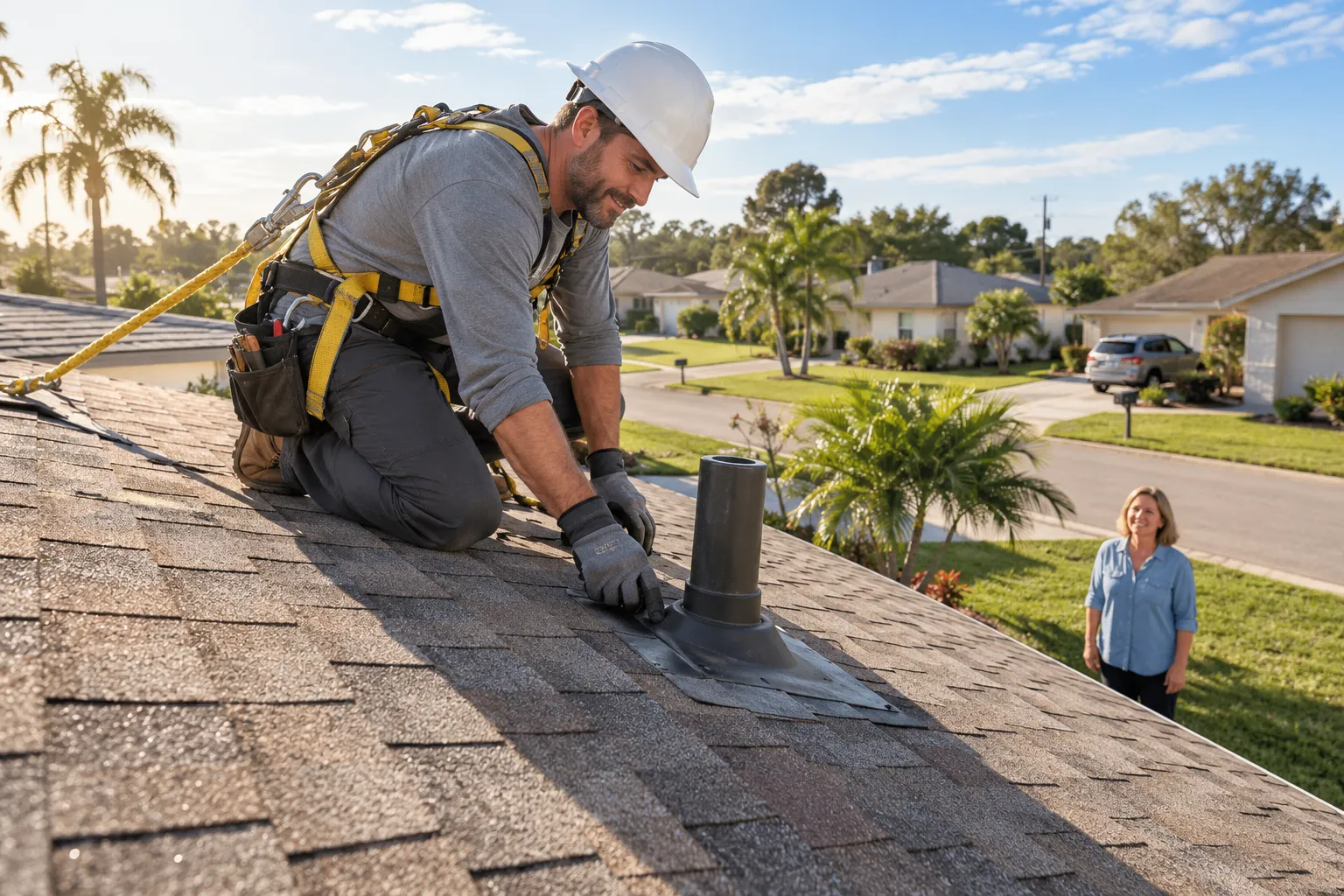
A small roof problem can turn into a big one, so get it looked at early.
Tell us about your roof and where you live. We will point you to a local provider in our network who can look at it and give you a written quote.
No obligation