Roof Repair for Leaks and Storm Damage
Talk to a local provider
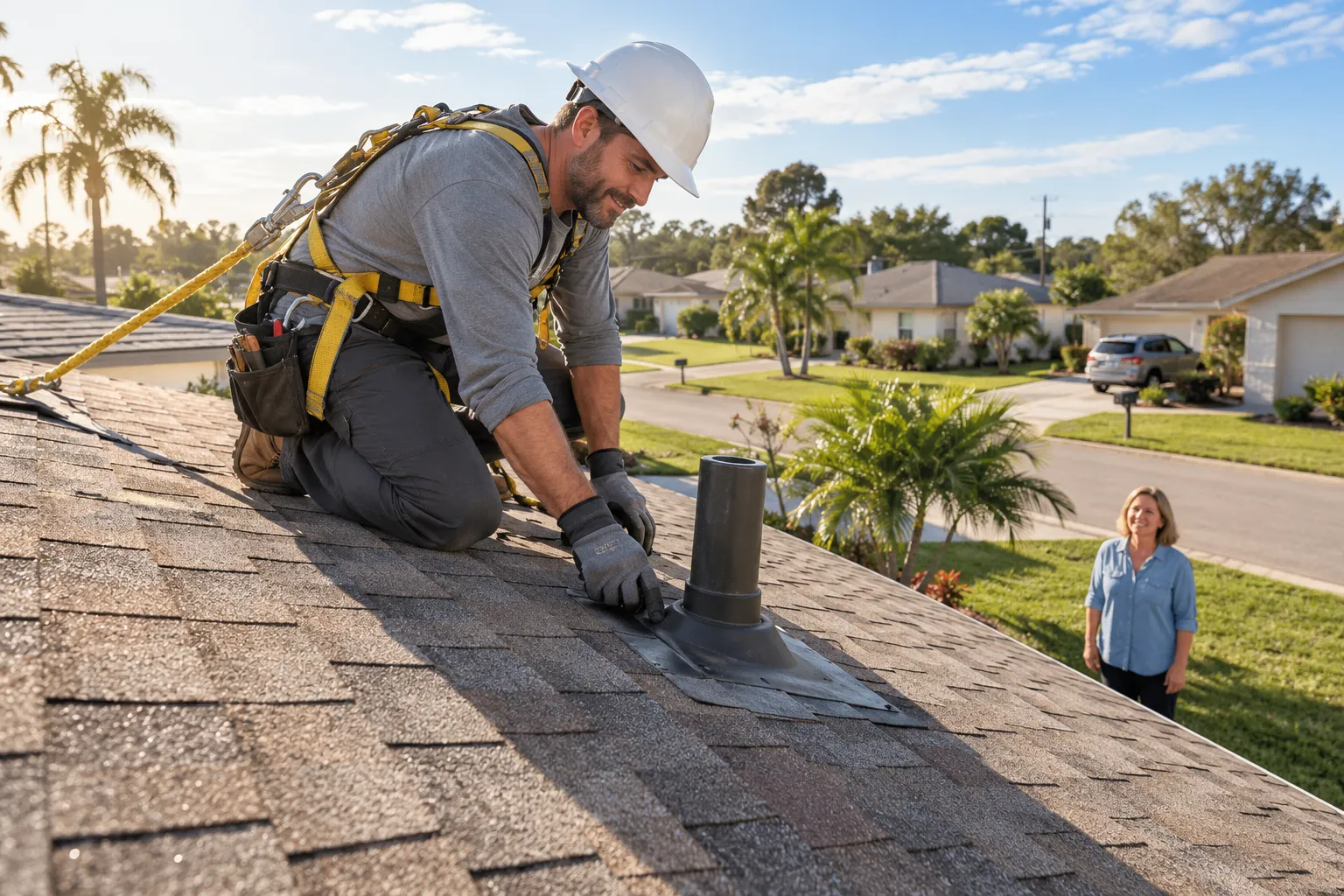
A roof repair fixes one damaged part of your roof. It might be a few loose shingles, a cracked tile, a bad seal around a pipe, or a leak that stains your ceiling. The goal is simple: stop the water, then fix the cause.
Cousincycle Roofing is a referral service. We do not do the work. We connect you with an independent local provider in our network who can look at your roof and explain the options. Many homes in the Delray Beach area face heavy rain, strong wind and thick humidity, so roofs work hard here. Take photos, write notes and ask for a written quote. Those steps help you compare providers and keep your records tidy.
Roof Leak? Start With These Steps
First, stay safe. Do not climb on a wet roof. Wet tile and shingles are slick.
Next, protect your things. Move items away from the drip. Put a bucket under it. If the ceiling bulges, poke a small hole to let the water out. Stand to the side when you do it.
Then take photos. Shoot the stain, the drip and the whole room. Add the date. Write down when the rain started and what the weather did.
Last, reach out to a provider. Request a callback to check provider availability in your area.
What Emergency Roof Repair Really Means
Emergency roof repair is quick work that stops active water. A fallen branch might open a hole. Wind might peel back a section. Many providers can respond quickly, but timing depends on the provider and the weather.
Expect a short-term fix first. It keeps rain out until a full repair can be done. Ask the provider to explain what is temporary and what is final.
Why Small Leaks Grow Fast
Water is patient. It finds a gap, follows the wood, and shows up far from the source.
Water Travels Sideways
A stain in the kitchen may start a few feet up the roof. Water runs along rafters (the angled beams under the roof) before it drips.
Humidity Adds Mold
Our warm, damp climate helps mold grow in wet insulation and wood. Mold can start in a few days and can be hard to remove.
Rot Weakens the Deck
The deck is the wood layer under your shingles or tile. When it stays wet, it softens. Then the repair gets bigger and costs more.
Common Roof Repairs
Most repairs fall into a short list:
- Replacing missing or curled shingles
- Swapping cracked or slipped tiles
- Resealing flashing, the metal strips around chimneys, walls and vents
- Replacing worn pipe boots, the rubber collars around plumbing vents
- Patching small holes
- Fixing sagging or soft deck sections
Flashing and pipe boots cause a lot of leaks. They are small parts, so the fix is often small too.
How a Provider Finds the Leak
The leak is rarely where the stain is. A good provider checks the attic first. They look for damp wood, dark marks and wet insulation.
Then they check the roof. They look at flashing, vents, valleys (where two slopes meet) and any spot with damage. Some use a hose test, where water is sprayed on one area at a time.
Ask the provider to show you photos of what they find. Keep those photos with yours.
Temporary Fixes That Are Safe
A tarp can hold until help arrives. A provider should place it, because roof work is risky. Do not nail a tarp down yourself in wind or rain.
Indoors, you can do more. Run a fan, empty buckets and lift wet rugs. Wet drywall and insulation should dry fast. Do not seal over damp spots with paint.
Storm Damage Repair
After a strong storm, look from the ground. Check for missing shingles, cracked tile, bent metal and debris. Photos from the yard are a safe start.
Storm damage repair often needs paperwork. Some policies may cover sudden damage, so check your policy. Providers can often help document damage for a claim. Keep every photo, note and written quote in one place.
Repair or Replace?
Repair makes sense when damage is small and the rest of the roof is sound. Replacement may be wiser when leaks keep returning, many shingles are curled, or the roof is near the end of its life.
Ask the provider two things. How much of the roof looks healthy? What will it cost to repair the same area again next year? Ask for a written quote for both options.
Repairs by Roof Type
Tile Roofs
Tile lasts a long time, but single tiles crack. Often the tile is fine and the layer beneath, called underlayment, has worn out. A provider may lift tiles to check it.
Shingle Roofs
Shingles lose their grit and curl with age. Sun and heat speed this up. A few bad shingles can be swapped, but old ones may crack when lifted.
Flat and Low-Slope Sections
Water pools on flat areas. Seams and edges are the weak points. Many homes and condos have a small flat section over a porch or entry.
Choosing Local Roofing Contractors
Local roofing contractors know the weather and the rules in your area. When you talk to a provider, ask:
- Are you licensed and insured in this state?
- Can I see a written quote?
- What is covered if the leak returns?
- Who will be on my roof, and when?
Check license details with the state yourself. Compare at least two quotes when time allows.
Keep It From Happening Again
Fix it, then protect it. After the repair, keep a roof file. Put in photos, invoices, notes and the quote.
Clean gutters before the wet season. Trim branches that touch the roof. Look at your roof after big storms. Book a check once a year, and before hurricane season starts.
What's Included
Leak and Drip Repair
A provider finds the source, patches or replaces the damaged part, and seals the spot against rain.
Flashing Fixes
Metal strips around chimneys and vents get resealed or replaced.
Tile and Shingle Swaps
Cracked tile and curled or missing shingles are removed and replaced with matching pieces.
Deck and Storm Repairs
Soft or damaged wood gets replaced, and storm damage is checked, photographed and written up so you have clear records.
Typical Roof Repair Costs
Costs vary by roof type, height, access and how much damage there is. These are typical U.S. ranges, not quotes. Always ask for a written quote, and compare more than one.
| Repair item | Typical range | Notes |
|---|---|---|
| Small leak patch | $150 – $1,000 | Depends on the source and roof access |
| Flashing repair | $200 – $800 | Chimney work often costs more |
| Shingle replacement (few) | $150 – $700 | Price rises with roof pitch |
| Tile replacement (few) | $250 – $1,500 | Matching old tile can add cost |
| Pipe boot or vent seal | $150 – $500 | A common, quick leak fix |
| Deck section repair | $500 – $2,500 | Larger rot raises the price |
How It Works
Stay Safe, Take Photos
Keep off the roof. Photograph stains, drips and any damage you can see from the ground.
Reach a Local Provider
Request a callback to check provider availability, or use the request form to ask for contact.
Get a Written Quote
The provider inspects the roof, explains the problem and puts the price in writing.
Repair, Then Protect
After the work, save your records and set up simple yearly checks.
Why Call Cousincycle Roofing
Plain Answers
You get simple explanations of what is wrong, what it takes to fix it, and what can wait.
Local Providers
Providers in our network know the weather, the roof styles and the rules near you.
Clear Records
Photos, notes and written quotes keep your roof file neat and useful.
No Pressure
Ask questions, compare quotes and take your time. You decide what comes next.
Other Services
Need roof repair in Delray Beach?
Tell us about your roof and where you live. We will point you to a local provider in our network who can look at it and give you a written quote.
No obligationRoof Repair FAQ
How do I know if my roof needs repair or replacement?
Small, local damage often needs only a repair. Many leaks, curled shingles, cracked tile across the roof, or an aging roof may point to replacement. A provider can inspect it and give both options in a written quote.
Will insurance pay for roof repair?
Some policies may cover sudden damage, such as from a storm or a fallen branch. Wear and age are usually treated differently. Check your policy, and ask a provider to help document the damage.
Can I fix a roof leak myself?
Indoors, you can catch water and protect your things. On the roof, the risk of falls is high, especially when wet. Leave roof work to a provider, and keep your own photos and notes.
Get in touch
Tell us about your roof and where you live. We will point you to a local provider in our network who can look at it and give you a written quote.
No obligation