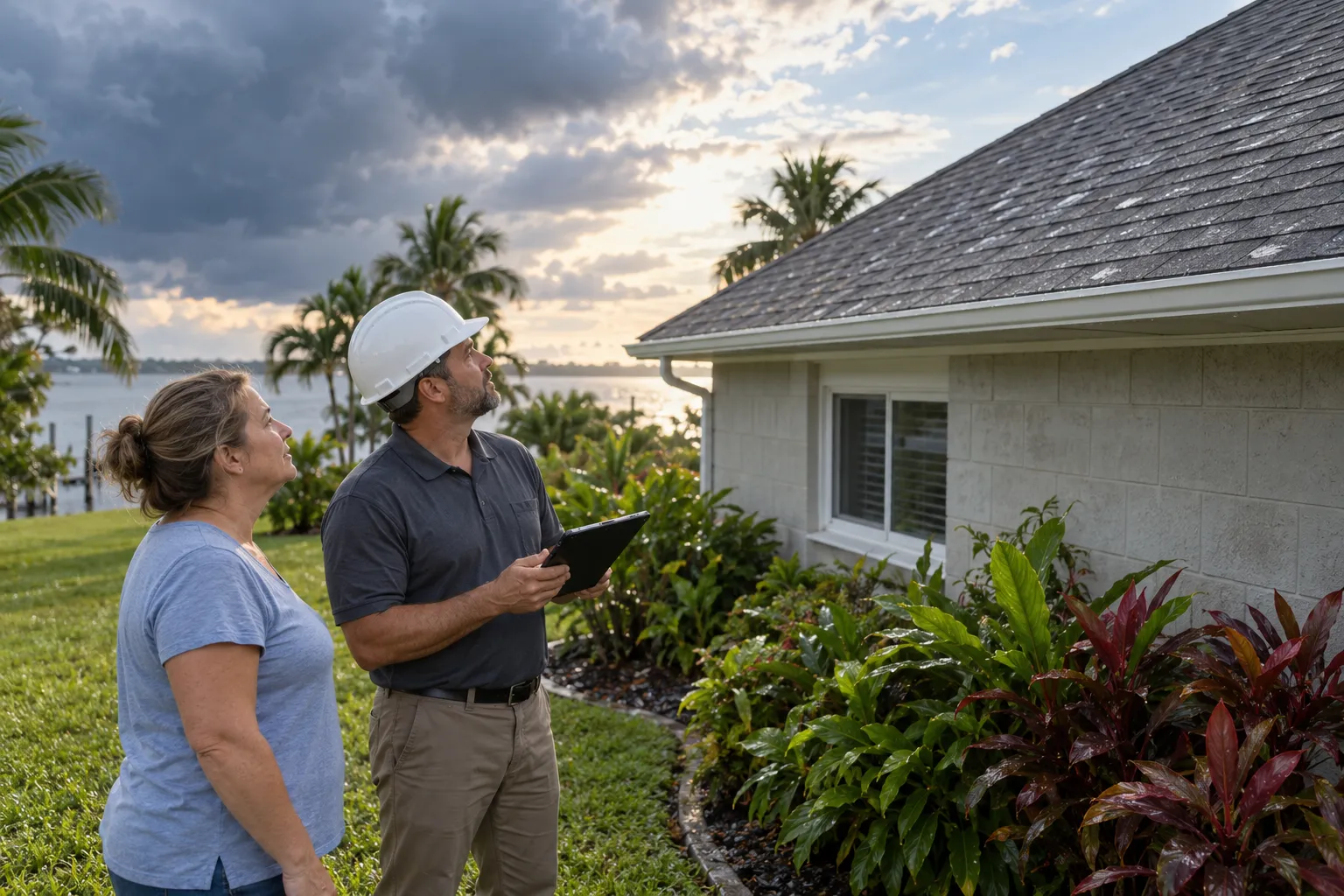
A strong storm can leave a roof cracked, dented or missing pieces. Some damage is easy to see. Some hides under shingles or tile until the next rain. In the Delray Beach area, summer storms and hurricane season make quick action wise.
Cousincycle Roofing is a referral service. We do not fix roofs. We connect you with independent local roofing contractors in our network who inspect storm damage and explain your options. Some roofs need a repair. Others need a full new roof. This page shows what to do first, what to write down, and what to ask before you say yes.
Storm Just Passed? Stay Safe First
Stay off the roof. Wet shingles and tile are slick, and damaged spots can give way. Look from the ground instead.
Then check inside. Is a ceiling sagging? Is water near a light or outlet? Is a power line down outside? If so, keep everyone out of that area. Call your utility or local emergency line for anything that looks dangerous.
Slow the Water, Then Take Photos
Do the small, safe things first. Put a bucket under drips. Move rugs and furniture. Lay towels on wet floors.
Next, take photos. Shoot ceiling stains, wet walls, and debris in the yard. Add a few wide shots of the whole house. Write down the date and time of the storm.
If you have an open hole, you may need emergency roof repair. Many providers can place a tarp (a heavy waterproof sheet) as a short-term fix. Request a callback to check provider availability.
Why Storm Damage Needs Prompt Attention
A small crack lets in a little water. Then the next storm lets in more. In our warm, humid climate, storms roll through almost daily in summer. Damp wood and insulation can grow mold fast.
Hurricane season runs June to November. A roof that is already weak has a harder time in high wind. Acting early keeps a small problem from becoming a big one.
Common Types of Storm Damage
Storms hurt roofs in different ways. Here is what providers often find:
- Shingles that are lifted, creased or torn off by wind
- Tile that is cracked, chipped or slid out of place
- Flashing (thin metal strips at edges and joints) that is bent or loose
- Dents in vents, caps and other soft metal parts
- Branches or debris that punched through or scraped the surface
- Gutters pulled away from the edge
How to Spot Hail Damage
Hail is tricky. It can leave a roof looking fine from the yard.
On shingles, look for dark, round spots where the gritty top layer (granules) has worn off. You may also see dents or small cracks. On tile, look for chips and cracks. Check metal vents and gutters too. Dents there are a clue that hail was big enough to hurt the roof.
Granules in your gutters or at the downspout are another sign.
What an Inspection Covers
A provider will walk the roof and the ground around it. Expect a look at:
- The roof surface, edge to edge
- Flashing, vents and chimney areas
- Gutters and downspouts
- The attic, for stains, damp insulation or daylight
- Ceilings and walls inside
Ask for a written report with photos. Ask for it in writing, so you can compare it with other quotes.
Repair or Replace After a Storm?
Small, local damage is often a repair. A few lifted shingles or a handful of cracked tile can be swapped out.
If damage is spread over much of the roof, a new roof may make more sense. Hail damage roof replacement is common when many shingles are bruised or when the roof was already old. Patches on a tired roof may not hold long.
The providers in our network focus mostly on new roofs. Tell them early if you think you need one.
Keep a Roof File
This is the simplest habit you can build. Use one folder, paper or on your phone.
Put in it:
- Storm-day photos and notes
- Close-ups of each damaged spot
- Written quotes and inspection reports
- Receipts for tarps, repairs and clean-up
- Your policy number and any claim notes
When the paperwork is in one place, every step goes faster.
Talking With Your Insurance
Some policies may cover sudden storm damage. Others have a separate, higher deductible (the amount you pay first) for wind or hail. Read your policy and check what applies to you.
Providers can often help document damage for a claim. Your photos, notes and a written report all help. Keep copies of everything you send.
You choose who does the work. Do not feel rushed.
Be Careful With Door-to-Door Offers
After a big storm, strangers may knock and say they spotted damage. Some are honest. Some are not.
Take your time. Do not sign on the porch. Do not hand over a large payment up front. Ask for a business name, a written quote, and proof of insurance. Then check it yourself. A good provider is fine with that.
Questions to Ask Local Roofing Contractors
Before you hire, ask:
- Are you licensed and insured in my state?
- Will you give me a written quote with the scope spelled out?
- Which materials will you use, and who makes them?
- Who handles permits?
- What does the warranty cover, and for how long?
- How will you protect my home and yard during the job?
Write down the answers and put them in your roof file.
After the Work: Keep It From Happening Again
Fix it, then protect it. Once the roof is done, a few habits help it last:
- Trim branches that hang over the roof
- Clear gutters and valleys (where two slopes meet) a few times a year
- Look from the ground after every big storm
- Have a provider check the roof once a year, and before hurricane season
- Ask about wind-rated fasteners and sealed edges on your next roof
Add each check-up to your roof file.
Ready to Talk to a Provider?
Storm damage repair is easier when you know the facts. You have photos, notes and questions. Now you can get a clear quote and decide at your own pace.
What's Included
Roof Damage Inspection
A provider checks the roof surface, flashing, vents, gutters and attic, then explains what the storm did.
Photo Report
Written notes and photos of each damaged spot to support estimates and claims.
Temporary Covers
Many providers can tarp an open area to limit water until work starts.
Repair or Replacement
A clear written quote for fixing the damaged area or installing a full new roof.
Typical Storm Damage Roof Costs
Prices vary by roof size, pitch, material and how much damage there is. These are typical U.S. ranges only. Get a written quote from each provider before you agree to any work.
| Item | Typical range | Notes |
|---|---|---|
| Roof inspection | $150 – $500 | Some providers include it with a quote |
| Temporary tarp | $300 – $1,500 | Depends on size and roof height |
| Shingle repair | $300 – $1,500 | Small areas of damage |
| Tile repair | $500 – $2,500 | Matching old tile can add cost |
| New shingle roof | $8,000 – $20,000 | Common after widespread hail damage |
| New tile roof | $15,000 – $40,000 | Higher cost, longer lifespan |
How It Works
Stay Safe
Stay off the roof, check for hazards inside, and place buckets under any drips.
Document Everything
Take photos, write down the storm date, and start your roof file with notes.
Request an Estimate
Ask for an inspection and a written quote from a provider in our network.
Choose and Maintain
Pick the repair or new roof you prefer, then follow a simple yearly check-up plan.
Why Call Cousincycle Roofing
Why Act After a Storm
Small cracks let in rain. Early action keeps water from reaching wood, insulation and walls.
Local Providers
Independent local roofing contractors know regional storms, building codes and the roof types common in homes here.
Clear Paperwork
Photos, notes and written quotes make comparing options simple and support any insurance conversation.
No Pressure
You compare quotes and decide on your own schedule. There is no obligation to hire anyone.
Other Services
Need storm and hail damage roof repair in Delray Beach?
Tell us about your roof and where you live. We will point you to a local provider in our network who can look at it and give you a written quote.
No obligationStorm and Hail Damage Roof Repair FAQ
How do I know if my roof has hail damage?
Look for dark round spots, missing granules, dents in metal vents, or cracked tile. Granules in your gutters are another clue. Hail damage can be hard to see from the ground, so ask a provider for a full inspection.
Does homeowners insurance cover storm damage to a roof?
Some policies may cover sudden damage from wind or hail. Others have a separate deductible or limits. Read your policy and check with your insurer. Photos, notes and a written inspection report can help with a claim.
Should I repair or replace my roof after a storm?
It depends on how much of the roof is hurt and how old it is. Small, local damage can often be repaired. Widespread damage or an older roof may point to a new roof. Get a written quote.
Get in touch
Tell us about your roof and where you live. We will point you to a local provider in our network who can look at it and give you a written quote.
No obligation